 |
An Introduction
to Cyberspace for Medical Professionals
BY
Sheldon Chang, MSPT |
|
|
An Introduction
to Cyberspace for Medical Professionals
BY
Sheldon Chang, MSPT |
last revision performed on 1-23-98
minor updates made on 1-19-99
These pages are frozen in the meager Internet style standards of 1996 when stylesheets existed, but nobody used them because browser support was unreliable and things just evolved slower then. Most of us left our HTML tags unclosed, the infamous <BLINK> tag was everywhere, and people put drop shadows on everything just because they could.
I was recently inspired to recover this work by the #100DaysOfCode challenge that encourages people to develop better programming skills by commiting to learn code and document their progress for 100 days straight. I'm too far along in my journey to join that challenge, but I've enjoyed supporting people who are just getting started. One thing I can do to inspire people is to talk about my own wandering career journey that went from life as a licensed physical therapist, hospital facility design analyst, Salesforce.com CRM systems administrator, and eventually to my current career as an independent Web developer.
I have much to say about how far we've come in the health and healthcare world since I first posted this paper online in 1995. For now I'm just going to leave this archived piece of Internet history up to give you a glimpse into the way webpages looked in 1996 and the attitudes healthcare professionals had about the Internet in the late 90's.
Good times.
It's almost 25 years later. I'm no longer a physical therapist and I can't take any more clients as a developer, but if you want to talk shop about the early days of the Web or the history of the medical Internet, you can find me on Twitter as @sysop408
This paper overviews the state of the Internet and its uses as is of interest to medical professionals. Although the international audience is acknowledged, this paper targets a primary audience of North American medical professionals who are unfamiliar with the medical resources on the Internet and the issues surrounding them.
Disclaimer
This paper and web site is an unpaid piece of work created under time constraints. Complete accuracy of information is not guaranteed. Many organizations and businesses are mentioned and linked to in this paper. Their appearance in this paper does not necessarily signify the author's endorsement.
Copyright Statement
This paper (like almost all electronic documents) is under copyright. Permission is granted to freely distribute this paper provided that the author is given credit and the content is not altered. However, the courtesy of notifying the author first is requested.
About the Author
Sheldon Chang graduated from Boston University in 1998 with a master's degree in physical therapy. After spending some time working in an outpatient rehabilitation setting, he has joined the staff of Neoforma.com full time as an online community resources manager. His technical background includes a thirteen year history of online computing and experience as an Internet consultant and tutor.
The Visible Human Project: Sci-Fi or Hi-tech? In 1986, the National Library of Medicine, foreseeing a day when high powered network computing would be a practical asset to medicine, [54] launched plans to fully digitize a male and female cadaver. The project would come to be known as the Visible Human and when efforts to create the visible man were finally underway in 1993, the task the researchers had on their hands was impressive even by today's high tech standards. Their mission was to create a fully imaged digital man and woman of suitable quality to serve future purposes of education and research.
The job involved making full body MRI and CT scans before slicing the cadaver into nearly 2000 cross sections and took four months to complete.[41] Since the researchers planned to turn the images into a future standard for anatomy, a relatively young and intact specimen was be needed. They found their answer in a convicted killer who donated his body to science before being executed by lethal injection. After the execution, the body was lightly preserved, frozen into a blue gel, and cut into four sections. Each section was then divided at intervals of one millimeter by a surgical saw and photographed into a Macintosh Quadra computer. Each finalized image took up roughly 7.5 megabytes of disk space and the whole project weighed in at an enormous 15 gigabytes, [54] the equivalent of 15 million pages of text or about 50 sets of Encyclopedia Britanicas. [41]
Samples of the images are available for free download from the NLM's web site in the original high resolution formats as well as in scaled down versions. The full set of images is available in exchange for a license agreement. As of this writing, the NLM has issued over 700 licenses in 26 countries to use the Visible Human data sets.
With the recent advances in computing power in recent years, the effort put into the Visible Human project is paying off. The transverse images can be used to construct 3D digital models of human anatomy [48] viewable at any angle and any tissue depth. Models created from the Visible Human data can be used as a gold standard and as a reference tool [54] for students. Educational software companies have used the data to create software teaching and reference modules of detail unimaginable in yesterday's interactive anatomy programs.
Virtual reality simulations, complete with realistic "flesh" textures have been created to mimic real emergency and operating room situations for medics and surgeons in training. Programs developed using the Visible Man data have been reapplied for use with real patients to allow surgeons to practice and better visualize risky surgeries [8] before the real thing takes place. Engineers designing safety equipment have used the data to help them develop better protective equipment and as an odd twist of events, Hollywood even used the data to help generate a character in the sci-fi movie The Fifth Element [8] released in the spring of 1997.
As impressive as the original Visible Human project was, the NLM eclipsed their original project several years later when the Visible Woman became the premier digitized cadaver on the Internet, setting a new standard for detail. Slices of the female cadaver were taken at every 1/3 millimeter and the final image count exceeds 5000 high resolution digitized images and weighs in at approximately 40 gigabytes in size. [24] Who says that women are the more modest sex?
What the Internet Holds for Medicine World wide networking via the Internet promises to revolutionize the way information is shared and consumed. Developers of medical resources on the Internet recognize possibilities in utilizing world-wide networking abilities to enhance communication and knowledge between and within the many areas of the medical professions. As recent as 1996, it was questionable whether the Internet would ever have practical uses for healthcare. Now, heading into 1998, though far from coming of age, numerous practical Internet applications for healthcare are emerging as the future of improving care and reducing overall costs. [3,29] The end of the century is a critical developmental period for healthcare interests in information technology. The clinical, administrative, and science/research arms of medicine will all be affected by the growing prominence of the Internet. [2] If for no other reason, it is in healthcare's best interest to understand and embrace technology to ensure that the coming changes happen in the favor of medicine and not just for the sake of becoming hi-tech.
History The origins of the Internet can be traced back to the US Department of Defense Advanced Research Projects Agency Network (ARPAnet) in 1969, [15, 38] but the Internet as we know it today didn't take shape until the 1980's. Initially, the goal was to create a fail-safe communications system in the event of a first strike nuclear attack. By design, the network would continue functioning even if a large block of it was completely destroyed. This was accomplished by decentralizing the network, meaning that each node of the network had autonomy and no one node had any more influence over the other nodes than the others had on it. After the Department of Defense, computer scientists and academic researchers had their stab at using the network that would eventually be known as the Internet. Scholarly data exchanged hands, but since all work and no play makes Jack a dull boy, it didn't take long for all sorts of fun and games to root itself into Net culture.[38]
Through the 1980's the Internet grew slowly and started to look like the Internet as we know it today. In 1991, the population explosion in Cyberspace began as the number of people on-line grew exponentially year after year. As of December 1997, the Nielsen Media Research group [34] estimates that more than 58 million people in North America alone had Internet access. The world-wide count was estimated by another group to be 100 million entering 1998, [59] but due to the size and open nature of the Internet, all statistics are questionable. The Internet and its access points have become so widespread that it can be accessed even in places like Antarctica, Northern Canada, and developing countries where telephone networks are inadequate or completely lacking. [31]
Societal Values of Cyberspace The Internet can be a very confusing place for newcomers not only because of the technical barriers that a new user faces, but because of the cultural barriers as well. Users of the Internet face a culture that is irreverent of geographic location and is based upon the free exchange of ideas. Quality information is the hard currency of the Internet and anything that interferes with the distribution of quality information is highly frowned upon. [38, 56]
Since anyone can gain an audience regardless of credibility, skepticism is also a key value of the Internet user.Two fundamental and interrelated values in the on-line world are the conservation of bandwidth and the preservation of an acceptable signal to noise ratio. [27, 38] Conservation of bandwith means to avoid the spread of useless information because the ability of the networks to traffic information is a limited resource. However, what is considered a "waste of bandwidth" is not universally agreed upon, but as a general guideline, posting redundant information, posting to inappropriate locations, and the use of unnecessarily large graphic files on web pages are nearly unanimously considered a waste of bandwidth. The preservation of an acceptable signal to noise ratio draws on a short wave radio analogy of a quality channel of communications. Whereas to the radio operator, the noise is static on his frequency, to the Internet user, the noise is "useless information" that hampers the search for quality information.
The Internet was said to be a functional anarchy because of it's lack of centralization of control and lack of "legislation," but it would be incorrect to say that the Internet is without rules. Although it's short on legislation, there are many rules and conventions that every user is expected to learn and follow, [56] nearly all of which can be deduced back down to one of the two fundamental values mentioned above, and which can then be reduced into the value placed on the free exchange of ideas and quality information. A functional Internet community will self-police its members to uphold its societal values, [38, 56] but at the same time it tends to resist outside control or legislation (which is short sighted anyhow since the Internet is international). Restricting the free exchange of ideas, is anathema to the recognized and lurking seniority of Cyberspace.
Although with the rapid growth of the Internet, the classical societal values of the old school Internet community appears to have greatly deteriorated on the whole, in smaller communication groups such as mailing lists (explained in the next section), the laws remain in effect. On the rest of the Internet, the abundance of junk information sometimes makes practical use of Internet resources a frustrating endeavor for new users who have not yet developed good information finding skills. Filters, agents, and third-party directories to resources are some emerging solutions to keep the noise down, but ultimately, new users need to develop sharp skills in locating and evaluating information in order to gain maximum benefit from using the Internet.
Searching for the right information in a large research library is not different from performing a search on-line. In the library, there is always more information than any one person wants, needs, or agrees with. Weeding out outdated sources, inappropriate references, and getting to the right information are not research skills that have suddenly become important with the emergence of the Internet.
Skepticism: The hallmark of the information savvy Because of a lack of control on what goes on-line and what doesn't, anyone can say something and have a potential audience of millions regardless of his or her credibility. The almost legendary on-line service and ISP, the Whole Earth 'Lectronic Link (WELL), has long bannered the message "You are responsible for your own words" across its login message. This means that each user is responsible for he or she thinks and says. It should also be said that you are responsible for what you believe. Since the Internet indiscriminately supports hucksters, fools, and genius alike, skepticism is a key value of the Internet user. The experienced user never consults only one source. [42]
The 20th century has been a gradual evolution from an information poor world to an information and information-junk abundant one. In an information poor world, the power of expert opinion (whether perceived or actual) is a highly valued and respected trait. As more and more people around the world are wired to the Internet, the potential sources of "expert opinion" may become practically unlimited. There becomes more room to scrutinize "expert opinion." Real expert opinion is not to be insulted and perhaps the shift will only be a mild one, but when sources for information are abundant, there may be a shift of focus away from relying on the power of expert opinion to the ability to be maximally interdependent between multiple sources of information. In less glamorous terms, this ability is called research.
Pierre Salinger, the now infamous former US journalist made a common rookie mistake when he gave too much trust to what appeared to be a source of expert opinion on the Internet. Unfortunately for Salinger, he learned his lesson only after embarrassing himself by expounding a radical conspiracy theory about the crash of TWA Flight 800 before the world on network TV. The Salinger incident triggers wholesale distrust of information gleaned from on-line sources and respected figures are afraid of making the same mistake that Salinger made. Writing off the Internet as a viable and valuable source of information is not the answer. The answer is in learning to be more critical consumers of information.
If people were as excited about information as the popular press appears to suggest, libraries would be more popular. Most of the talk surrounding the Internet today focuses on it as a medium of information and misinformation, but historically, the growth of Internet use has been more about the need for people to affiliate with others [40] rather than a burning desire to access information.. Having information on demand is important, but having more information is not always better. Anyone working in a position that requires processing and management of a lot of information can attest to the psychological strain of information overload. Communication and interaction with other people is what really makes the Internet so interesting.The average wired healthcare provider is at an advantage with human and information resources available to him or her in comparison to non-wired counterparts. Cyberspace can be an effective medium for networking with colleagues around the world and is increasingly useful as a reference for some medical information. [20, 31] For the medical professional practicing in seclusion in rural areas or in private practices without close connections to various medical specialties, the Internet can be a godsend and allow them some of the flexibility and luxuries of a teaching hospital. [52] For the medical professionals working in places where access to special opinion is not a major barrier, electronic correspondence may still have a great value in allowing faster and more convenient access to opinion.
Numerous tools exist for healthcare providers to communicate and access information on the Internet. E-mail is used to send messages to other Internet users. Web "browsers" open up the multi-media world of the World-Wide-Web (WWW) through point and click navigation. Newsgroups are used as electronic message boards to hold public discussions. Chats allow people to "talk" as if on a telephone by typing messages in real time through the computer.
E-mail is the most basic and most popular use of the Internet. A standard e-mail account allows the user to send a typewritten message to any other person or to any number of people in the world with e-mail accounts. In recent years, E-mail programs have grown more complex and now allow users to package computer files such as word processor documents, voice messages, images, and programs as "attachments" to the e-mail. Voice messaging is a particularly eye catching application of e-mail because it could mean being able to receive "phone messages" in your e-mail account in the future. For the time being, e-mail predominantly remains a simple text only environment.
Mailing lists are services that can turn any number of otherwise independent e-mail accounts into a group communication forum. Also colloquially referred to as "Listservs," mailing lists allow for one piece of e-mail sent to a central address (ex: CARDIOLOGY-L@anywhere.net) to be reproduced and sent off all e-mail addresses that subscribe to the mailing list. [15] (In this case, CARDIOLOGY-L, a fictitious group of people interested in discussing cardiology related topics.) The subscribers on mailing lists are people who have made specific access requests to be on the list.
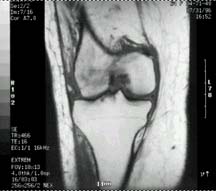
An MRI image of a difficult case from Dr. Randale Sechrest's web site. Dr. Sechrest consulted with members of the orthopedic@weston.com mailing list about this osteonecrosis of the knee patient. Electronic mailing lists appear to be the electronic forum of choice for medical professionals who wish to link their keyboards to the group mind of their colleagues and counterparts outside of their immediate personal contact. Through the use of mailing lists, clinical and research questions are posed, requests for rare information are made, commentary and input on studies in progress are invited, practice techniques are shared, commercial medical products are critiqued, and just about any other kind of information (or non-information) that might be exchanged when a group of people with similar backgrounds are given equal opportunities to be heard.
Mailing lists exist for just about any topic and each varies in scope of membership from only a handful of subscribers to upwards of the thousands. They are used both to enhance communication on a global scale as well as locally between or within medical departments. Some educational institutions use mailing lists for student discussions outside of class time as an adjunct to the traditional educational settings. Although mailing lists are neither difficult nor expensive to set up, an effective list requires an administrator to oversee the list and perform maintenance work.
Usually, mailing lists are "semi-public" environments in which anyone who wants to subscribe to the list can do so. Some lists limit its subscribers to a restricted group who meet a membership criteria. Another distinction between mailing lists is the issue of being moderated versus being an open forum. All e-mail sent to a moderated mailing list needs to be approved for posting by a moderator before being sent to the e-mail addresses of the list's subscribers. Moderated groups are sometimes seen as an option to limit the amount of noise (inappropriate or redundant messages) passed through the list, but also suffer the drawbacks of requiring the frequent attention of the moderator and a slower turnaround on messages.
Unmoderated mailing lists are the rule on the Internet and although they tend to carry more noise in general than their moderated counterparts, they can still be used effectively to communicate when overseen by an active list administrator and self-policed by a core of members who understand and uphold the fundamental societal values of Cyberspace.
Of all forms of electronic "conferencing," mailing lists are the most invasive because all messages are delivered straight to the subscriber's mailbox whether he or she wants to read them or not. In comparison, newsgroups (covered in the following section) and information on web sites need to be accessed willfully. Because mailing lists are somewhat invasive to the subscribers, they're characterized by a lower tolerance to distractions and its members will either self police to enforce its standards or unsubscribe and leave.
An attractive feature about having mailing lists as an alternative for professional consult is that the digital world is never completely out of office. Good mailing lists can offer useful and accurate information to its users from its users. [20] Answers to questions can begin coming back within the hour that the question was posed to the list. It may not be necessary to wait until Monday for crucial input or intrude with potentially invasive phone calls. Of course, it may also be easier for a colleague to ignore your e-mail.
Rapid communications of a time sensitive nature over a large geographical area are best done through mailing lists. The World Health Organization (WHO) uses a mailing list as a complement to its more conventional communicable diseases outbreak reporting channels. Once the subscriber base of over 2000 users on the list receive the message, many will redistribute the WHO alert to other mailing lists and increase proliferation of reports. Mailing lists have allowed outbreak reports to be spread faster than the WHO itself could actually otherwise deliver. [60]
Mailing lists appear to be the tool of choice for group communications on-line. Its successfulness in sustaining group discussions relies on two things. First, mailing lists are merely extensions of e-mail accounts, eliminating the need to learn a new program. Second, because the discussions on mailing lists are delivered straight to a person's mailbox as regular e-mail, the discussions are slightly invasive into his or her on-line routines and require personal attention to either read or delete.
When using mailing lists to communicate, two things need to be remembered. The first is that although the list sometimes will feel like a close knit and private group, the reality is that on most lists, anyone could be a subscriber on the receiving end of your mail. The second is that since mailing lists invade into other people's private mailboxes, being concise and practicing good "netiquette" are doubly important.
Newsgroups would be like public e-mail (if there was such a thing). They are open bulletin boards with designated topics where anyone can leave a message for the everyone else looking at the newsgroup. Newsgroups are similar to mailing lists in that they are both group forums that allow people to communicate through text based messages. The difference is that with newsgroups, the messages are held on a server for open access and do not require specific access requests to read or post messages to. Although access to newsgroups is completely open, a small number of them are moderated in a similar fashion to moderated mailing lists.
...newsgroups are less invasive and its information needs to be retrieved by those who wish to view it. Readers will not automatically receive a 200K image file automatically just because "some bozo" decided to send a full set of pictures to accent the message.One advantage that newsgroups hold over mailing lists is that on the whole, its easier to locate a newsgroup on a certain subject than it is to locate a mailing list on the same subject. Newsgroups are also less invasive. They are purely public environments that allow anyone to read its messages or post messages to its "threads" of discussion, but its open nature also tends to increase the level of chaos in comparison with other group forums. Newsgroups appear to be the hardest hit by the "noise" created by the Internet's rapid growth.
In general, newsgroups appear to be less effective than mailing lists for the purpose of carrying group discussions across the Internet. One of the main reasons is that it requires an extra step to accessing messages from a mailing list and necessitates the need to learn another computer program to access newsgroup messages. Another reason is that because their message environment is so open, noise and "spam" from unscrupulous advertisers are severe detriments to the usefulness of newsgroups.
Like with e-mail programs, current programs used to access newsgroups also allow users to incorporate images or sound into messages. For groups that plan to exchange a lot of images or sound files that are not sensitive in nature, using a newsgroup may be a good option (a web site would be a better one) because image and audio files are often large and takes time to transmit. Since newsgroups are non-invasive into users' private on-line spaces, it's much more acceptable to incorporate multi-media into newsgroup messages. Newsgroup readers will not automatically receive a 200K image file automatically just because "some bozo" decided to send a full set of pictures to accent the message. They will receive it only if they select the message for viewing.
Though the health and medical disciplines have never appeared to find much interest in using newsgroups devoted to its interest areas, newsgroups may be useful for other reasons. Newsgroups are great places to scan for public opinion, esoteric information, or locate a talkative expert on unusual topics. The author of this paper once needed information on one handed fishing techniques for a disabled fisherman. The question was posted to the "rec.sports.fishing" newsgroup and numerous people replied with opinions, stories, and references to more information. Now, news search engines such as DejaNews catalog the contents of the major newsgroups on Usenet, making it easier to find already existing discussions on a vast array of subjects.
Another prominent use for newsgroups are as support groups. There are newsgroup based support groups for eating disorders, depression, panic disorders, and domestic violence just to name a few. Patients with physical illnesses do not often have access to a community of people who share their same fears, thoughts, and depression about their disorder. The Internet can connect otherwise isolated people in need of help with other people who understand their situation. [12, 27, 41] It's not uncommon to see highly intimate interpersonal relationships develop in on-line support groups. [36, 41] Most people feel more comfortable talking about sensitive issues through the relatively anonymous and faceless screen of a keyboard. [12, 36] Disclosure to an understanding and sympathetic ear, might be that first real step to healing.
The very public nature of Usenet may discourage some people from posting messages to its newsgroups. When privacy is a concern, anonymity can be obtained through anonymous re-mailing services that strip identifying information from message headers. Even with safeguards, and especially when posting to a newsgroup, follow the golden rule of posting to the Internet. "Never post anything you wouldn't want to appear on the front page of the New York Times."
Any person with a PPP or SLIP connection to the Internet and a computer manufactured in 1996 or later should be able to access the web. In comparison to the essentially text based mailing lists and newsgroups, the WWW allows for a great degree of flexibility in the way information is presented.The multimedia flexibility of the world wide web has proven itself a very attractive way of presenting information to an audience seeking a specific type of information. The web can support multi-media presentations, medical image libraries, on-line textbooks, patient/practitioner information files, interactive programs, and numerous other applications. It's big drawback is that the web has rightfully earned its dubious nickname of the "World Wide Wait" because standard Internet connections are inadequate to traffic the bandwidth demanding applications of the web. In some places in the world, the wait can be intolerably long.
Web sites seem to be an ideal way to disseminate information in a one to many fashion, but mailing lists and newsgroups seem to be a far better forum for the many to many communication style that make the Internet such a stimulating environment. Among other things, web site based discussions may fizzle because of problems with accessing the WWW, confusing and inconsistent interface design, and the increased effort it takes to give input into a WWW based discussion.
Following sections will discuss some of the numerous uses of the WWW for medicine.
Digital literature is more than just a new spin on an old medium. In the past, when high tech versions of previously available information becomes available, the tendency has been to scoff at them as nothing more than wasteful novelties. Indeed, if we were trying to replace all printed resources with electronic ones, we would be using the electronic medium for the sake of its novelty. In the current reality, the intent of on-line information providers is to supplement printed material rather than replace them outright.Print and digital mediums each have its strengths and weaknesses. Like supermarkets and convenience stores, people use each for different reasons. When it comes to user friendliness, what computer program can beat the accessibility and familiarity of a favorite reference book, dog eared and worn from frequent consultations? When it comes to malleability of information, what textbook can beat a web site's ability to update and reshape information on a whim? What is more cost and time efficient if one has a simple inquiry, to sit down and punch out a detailed e-mail to a mailing list or pick up the phone and get in touch with a local colleague? The key to benefiting from the on-line medium is learning to integrate rather than replace--a simple, but overlooked point.
Aesthetics, portability, and other given weaknesses aside, electronic literature has many qualities that makes it useful especially to research oriented populations. [9, 33] One very useful feature of electronic text is that it is keyword searchable, meaning that the reader can automatically jump to every place in a document where a key word or phrase appears. Keyword searching affords the user the ultimate subject index. Another useful quality is the ease of replicating electronic information which can be cut and pasted or cheaply duplicated from source without loss of quality. Also because digital information can be directly transmitted over a network, patient data, research findings, radiographs, data analysis, insurance reports, etc. are much more easily and efficiently exchanged between parties than through faxes or having documents brutalized by mail delivery services.
Through a trickle down type of effect, electronic forums (especially in long discussions) often have an ability to enrich total input by drawing in the commentary of otherwise silent listeners.Only a year ago, quality medical information available on-line were slim pickings. Good information still isn't quite abundant (yet), but it no longer takes computer scientist to unearth the gems hidden in a sea of pseudo-information. Whereas once there were only a handful of professional homepages that gave the user information on how to contact the organization via the telephone or regular mail to receive information, today there is a growing database of usable medical literature on the WWW. The medical Internet now features on-line journals (both exclusive and electronic versions of print editions), electronic textbooks, news services, continuing education classes, clinical practice guidelines, patient education handouts, drug databases, discussion forums, image and video clip libraries, and interactive programs among other things.
It seems that the health professions, once hesitant to embrace the changes of emerging information technology, have woken up and are beginning to take advantage of on-line resources. The surging interest (and concern) over the utility of the WWW and Internet is reflected in the increasing quantity of scientific literature from many backgrounds that are beginning to address professional issues of the Internet.
The developing information technologies of the Internet promise to create a drastic shift in the way that the medical community exchanges information and communicates. A look at the great debate over the usefulness of paper-based journals vs. the growing number of digitized journals is a good indication of the great and sudden impact that the Internet has had on the way the healthcare industry views electronic communication.
The status quo of journal publications is still a reality dominated by the printed and bound variety, but electronic based scientific publishing has gained ground on the conventional print journal. The electronic journal has emerged and continues to grow despite coming upon a hesitant and even resistant audience threatened by a change in the way that new scientific information is brought into the world of medical research. Converts of the electronic medium point out that electronic publishing is a way of decentralizing control of intellectual property and putting the author back in charge his own work while improving the exposure of information [16, 25]. Critics will be quick to bring up concerns about self-publishing posing a threat to the livelihood of scientific journals and issues surrounding quality of information [9, 32].A 1996 study by the Library Information Technology Center (LITC) of the UK on electronic copyright management systems (ECMS) suggested for alternative copyright controls on scientific information based on its unique qualities in comparison to "commercial" publications. In commercial publications, the author and the publisher have an interest in restricting readership to paying customers only because they make money from the sale of their product. [9, 32] In contrast, academic writing has virtually no market and costs of production are reclaimed through subscription fees. In the academic scenario, the publisher has an interest in restricting readership to hopefully garner a larger subscriber base, but the author, who receives no monetary compensation, is interested in maximum exposure of his or her research [9, 16, 25].
For the reason that academic writing has very little demand, [9, 16] the LITC report determined that a pay-per-article basis of document delivery to be fiscally impractical due to the high charges that would need to be levied per document. Their suggestion is to implement a subscription-based site licensing model that would allow publishers to fund themselves while giving readers the liberty of what is done with the literature so long as a level of subscription is maintained [9].On a more radical page, author subsidized production costs have also been suggested in return for free and open access to the academic and scientific community. [9, 16]
Not everyone has to be a pioneer. Medicine and society will always need the consistent steadfast traditionals who remain guardians, developers, and promoters of the classic values and skills of a profession.Ovid Technologies, a leading company in the growing industry of electronic literature, is one example of an electronic document delivery service. Ovid, in addition to providing an interface and access to over 90 biomedical and scientific databases such as MEDLINE, ERIC, CancerLit, and PsycINFO, also boasts over 350 journal titles in its full text collection. [35] Titles include the Journal of the American Medical Association, The Lancet, New England Journal of Medicine, and Science. Access can be obtained either through a subscription service or on a pay-per-article basis.
A unique and important advantage of electronic publishing is the enhanced ability to entertain discussions and invite commentary. One author on a cyber-psychology mailing list commented that his on-line publications have resulted in far more professional contacts than all of his printed works put together." Furthermore, he adds that his pre-Internet publications, once put on-line generated additional commentary from his professional community. Authors of pre-prints could especially benefit from the ability to present drafts to a scientific community for commentary [6]. Some researchers even put up their works in progress and invite discussion from their colleagues around the world. With the multimedia nature of the WWW, presentations of studies are free to contain sound and video--something that print media will never accomplish.
Print media, however, has its place and will always enjoy certain advantages over electronic media. One advantage it enjoys as of is that it is tested and proven unlike its electronic sister, full of potential, but having only speculation to back her up. The balance of power will change, but the emergence of the on-line medium will no more spell doom for the printed medium any more than supermarkets have pushed convenience stores to extinction.
Another advantage that print journals enjoy is owed to the conservative nature of the scientific community (not to mention its computer illiteracy) hesitant to embrace change to a new model of publishing as well as the interest of high powered journals in resisting a change that may dilute its prestige and power. Though electronic scientific publishing has made surprising gains in only a year, the politics of modern science may work against their continued growth. [9, 16, 32] In the past, the difficulty and expense of publishing scientific information has encouraged a research environment dominated by a relatively small group of elite who publish in a relatively small number of journals with prestigious reputations. Since the power of distribution is not as advantageous in the electronic medium, the upper echelon of scientific publications may choose to resist the digitization of academia and create a divide in scientific journals in which the electronic versions become synonymous with mediocre science [9, 32].
Regardless of how the controlling institutions of scientific thought feel about going along with the trend of digitizing everything, they know the potential of the Internet to promote their journals. Just about any journal that's worth its glossy cover has a web site with archives of their article abstracts. Abstracts are abundant on the Internet, and full text articles can be occasionally found.
Many signs point to changes coming up ahead. Budding Internet-only electronic journals such as the Electronic Journal of the Radiological Society of North America and Electronic Journal of Orthopedics are peer-reviewed journals based on the traditional print models. On-line versions of established publications are also showing up. Though most of the first comers to the digital age are of the low-profile variety of publications, some higher profile publications such as the British Medical Journal (BMJ) of the British Medical Association have decided that it's better to work with the changes rather than "fight the inevitable." [6] (At the previous revision of this paper, the BMJ allowed full-text access to many of its current and archived journals. This no longer appears to be true.) The New England Journal of Medicine's web site features an changing collection of full-text archives on featured topics in addition to access to the famed journal's abstracts.
Fear of losing subscriber base may play a key role in the decision to keep the already successful journals in off-line formats only, but the fear may be unfounded. Lem Lloyd, the new media director for the St. Paul Pioneer Press, was quoted in an Internet magazine saying "Most people, whenever they do anything on the Internet, like to print it out--which tells you something." [23] The unappealing aesthetic of electronic text is just one reason why printed text will always have a place. It's possible that the primary audience to digitized versions of most print journal publications are going to be students or non-research oriented members of the healthcare community who are more likely to hit the library's photocopier instead of subscribing anyway.
Certainly the publishers of journals do run a risk of losing subscribers if they make their material free on-line, but they also have a chance of gaining subscribers by showcasing their material. The WWW is often viewed upon as a to be avoided nebulous of free information that sucks away profit from print media. Rather, it would be more accurate to say that the WWW is a new form of media in its unstable adolescence and will eventually mature into new markets.
In an unfamiliar place, there's nothing like a familiar name. Amid all the warnings of questionable information on-line, there's the healthcare professional's old friend MEDLINE. Numerous options, Web based or otherwise, exist to access the MEDLINE database on-line. Some MEDLINE searches are free and some are available for a fee.
Free MEDLINE searches became popular in 1996 and numerous web sites now host a free MEDLINE search. Free searches were first seen as advertising gimmicks to draw traffic to web sites, but since the National Library of Medicine (NLM) in the US has begun offering PubMed and Internet Grateful Med for free, signs indicate that MEDLINE (free or for a fee) through the Internet can be a legitimate asset.
In general, the free MEDLINE services are inferior counterparts to the fee based services. [7] A systematic evaluation of a number of free MEDLINE services performed by one group in June of 1997 found that some services may have databases that are as much as seven weeks behind the better ones. [7] Currency of the database is really a minor issue. More important is that there are sharp and important differences between the interfaces (search engines) created by each service to retrieve relevant items from the MEDLINE database.
The search engine programmed for each site to access the MEDLINE database is the most important piece of a MEDLINE search and unfortunately also the most inconsistent. Some engines will perform "fuzzy logic" searches and find related articles. Some have advanced search options that allow fine tuning of a search to increase the relevance of returned materials. Some are simple to use but so stripped down that they're no longer useful for purposeful research. A few (such as the NLH's Internet Grateful Med and Ovid) even cross reference terms with the MeSH database, a "subject thesaurus" that can be used to find information related to the search term. [7, 49]
Good electronic information doesn't just make patients happy. It may help reduce costs by acting as a self-administered pre-screening by the patient and improve proper utilization of healthcare services.Wide variations exist in number and relevancy of returned information. During the systematic evaluations performed in 1997 as mentioned above, the number of returned articles averaged 7 to 8 with a low of 2 and a high of 14. [7] Either some of the search engines are pulling in irrelevant citations, not finding more obscure citations, or both. Free does not necessarily mean "bad" with MEDLINE search services, but the fee based services are in general, better and also faster.
In addition to allowing searching, some of the MEDLINE search services also offer full-text delivery through the mail for a fee. The Loansome Doc program [49] of the NLM's Internet Grateful Med is one such service. Select articles, such as some of the citations featured in the NLM's PubMed service, can even be accessed full-text for free.
Also, as of September 1996, the National Library of Medicine released an on-line PRE-MEDLINE search, allowing users to search MEDLINE pre-print citations and abstracts that have not yet undergone the rigors of review. [49] Though PRE-MEDLINE articles have not yet been given the assurance of quality checks, information contained in them may be useful for members of the research community who could benefit from the new information immediately.
A growing number of medical texts are either available on-line or in electronic form in CD-ROM or other formats. One such textbook that is available on CD-ROM and on-line is the popular Merck Manual. Another on-line textbook is Wheeless' Textbook of Orthopedics, which few if any electronic textbooks currently on-line can match in content and user friendliness. One look at Wheeless' work is an insight into how the Internet can benefit clinical medicine.Wheeless' textbook, which started quietly enough as a one man effort that provided quality, but limited content, has in one year matured into a co-authored advertiser supported multimedia resource with content categories ranging from basic orthopedics to prescription medications to operating procedures. Wheeless himself summarizes some advantages of using the Internet to publish his textbook:
The hypertext format allows the reader the most efficient path to the desired information. Further, textbooks can only be updated every few years and are terribly expensive. In contrast, the Internet has given me the ability to write a book that can be accessed by people in every country of the world, and yet I am under no constraints from a publishing company. [58]As effective as the hypertext format mentioned by Dr. Wheeless is, it's not likely that mainstream publishers will be rushing to publish fully digitized versions of their new textbooks, but some are beginning to make the most out of both mediums by combining the convenience of the printed volume and the flexibility of the Internet. Oxford University Press is one such publisher. Owners of their Oxford Handbook of Clinical Medicine, and Oxford Handbook of Clinical Specialties can access electronic updates and supplementary information to complement their hardcopy prints. By creating a medical text with an open end, the clinical shelf life of a text book could potentially be extended by years. [31]
In addition to textbook type information, there is a growing resource of clinical reference books such as the Physician's Desk Reference. The on-line version of the PDR is free for qualifying physicians and available for a subscription charge to other health professionals and the public. Unlike the print version, the on-line PDR can go anywhere you go so long as you can get your hands on a keyboard and a modem. Another example of an Internet reference is the Internet Drug Interaction Database, which allows users to enter names of drugs to search for interaction effects or to enter individual drugs to obtain a listing of all interacting drugs. Now with the availability of powerful personal digital assistants such as the Internet ready 162Mhz Newton MessagePad, a card modem and a cellular phone will virtually allow the PDR and other on-line references to be carried in a pocket (albeit a large pocket).
On the supply side, keeping a complete stock of things like consumer information and industry bulletins can be very expensive. On the demand side, things like old press statements or reports may be needed on occasion, but either difficult to locate or a hassle to request through conventional means. The Food and Drug Administration of the US addressed both ends of the public information problem through the web and the Internet. Through use of the WWW, the FDA was simultaneously able to cut down printing and delivery costs while at the same time improving the availability of its wide range of consumer and provider information offerings. [26]The FDA's website is structured into sections oriented to consumers, journalists, and healthcare professionals to better reach the populations that most frequently need it's publications. Every new publication that is put out by the FDA is immediately placed onto its website. Already in their Freedom of Information Act Electronic Reading room, there are indexes to warning letters, inspection operation manuals, monthly import detention lists, medical device reports, and other materials. [50]
For some purposes, the speed of delivery and currency that the Internet allows is very important. What's news today can be a problem tomorrow. E-mail is one way that some informational organizations can alert a specific audience quickly. Services such as the Intellihealth Professional Connect, sends daily editions of abbreviated medical news stories that can be accessed more completely on its web site. Reuters Health is another information service that provides daily news summaries on the WWW.
On the computer and technology front. Edupage is a periodic e-mail summary of all late breaking news in the fast moving industry of computer technology. In an industry such as computer technology where the news is happening so fast it's almost impossible to keep up, having the short summaries that services like Edupage brings is a very important asset for casual followers of developments in information and computer technology.
While the Internet may be still be lacking in the highly refined information sources that people doing concentrated research require (though it is changing slowly), it still opens doors for researchers to connect with many colleagues. One of the original purposes of the Internet was to allow people doing scientific research to network with each other [58] and many years later, the Internet is more than ever well suited for the needs of those seeking professional contacts. Some research scientists have already opened their works in progress on-line and invite private commentary or open discussion on their research. More scientists might open up their work to a community of their peers if the fear of plagiarism weren't so great. Plagiarism and blatant violations of copyright are strong representatives of the shadow side of our information technology. They are real threats and solutions are currently being sought to make seeking commentary on-line less of a professional danger. The issue of copyright and plagiarism will be discussed further in a following section.
Research scientists looking to perform questionnaire based studies may find collecting data from subjects on-line to be an economical way to conduct their surveys albeit impossible to generate a true random selection of subjects for their study. Members of the on-line clinical and research psychology fields have already begun to use the Net readily to perform surveys and gather data.
Sometimes the data that can be gathered on-line is not only easier to get, but may otherwise be difficult to obtain. One surgeon on an orthopedic surgery mailing list used his ability to quickly contact a large number of his peers to collect viewpoints and experiences with protective "space suits" used by surgeons during some operations to incorporate into his study on the usefulness of the suits. Many replies were returned publicly over the mailing list for all to view and may have encouraged otherwise non-responders to give their input. Through a trickle down type of effect, electronic forums (especially in long discussions) often have an ability to enrich total input by drawing in the comments of otherwise silent listeners. If you were to send a typed letter asking a large number of busy orthopedic surgeons about their experiences with a piece of equipment, how good of a response would you expect to get?
Reliable information can be found from many different kinds of sources on-line. Some health and medical information web sites are put up by individual medical professionals who posses a talent with computers such as the Running Injuries page of Dr. Pribuit. Some are an informational branch of efforts funded by grants or are the work of established information departments of teaching hospitals and educational institutions. Well informed and intelligent patients also can contribute valuable resources on-line.

Image of a sclerosed coronary artery from the WebPath: Internet Pathology Laboratories site. Most major hospitals now have websites. Some of the better examples even contribute resource information such as case studies in an electronic archive of grand rounds for browsing. The University of Utah's WebPath: The Internet Pathology Laboratory keeps a large collection of pathological images taken from autopsy examinations along with explanations of stages or progression and objective findings as part of their educational curriculum. Brigham and Women's Hospital in Boston, MA and numerous other radiology centers around the country keep a library of radiographic teaching files of cases searchable by body part or imaging technique. The administrators of the Brigham Radiology site (BrighamRAD), view the WWW as a way of moving education back to more of a one-on-one level with the interactivity of the Web. One of BrighamRAD's rationales to providing case studies on-line was that shared teaching files for their medical residents would be of most benefit to them if they were always available and accessible on-line [21].
The source of on-line educational material may even come straight from the patients themselves. Especially the case with rare disorders, it's not uncommon to find websites created by well educated and informed patients who use the Internet to present their stories and knowledge of their disorders, hoping to generate awareness of their condition. [24] Through such websites the medical profession can achieve a deeper understanding of the human side of disease and become learners of privileged information that would never be found in a medical text.
Good information can come from a number of sources. Bad information, can come from even more. Hucksters trying to make dishonest money, poorly informed individuals, advertisers with an agenda, or people churning on the rumor mill can all create valid looking information resources. Misinformation on the consumer level is a concern of healthcare providers because it could result in harm or encourage unrealistic expectations of medical treatments.
With the popularity of the Internet growing on the healthcare front and concerns over the quality of information, there have been calls to develop standardized methods to evaluate the quality of on-line resources. Quality of information is not only a concern because of concerns over misinformation, but also to spare healthcare professionals the time and frustration of scanning through a promising looking site with completely sound, but useless information. To address the issue, a recent summit has gathered to develop an assessment tool for a medical website's quality [1] based on the following criteria:
Some individual organizations such as Six Senses and Magellan already review rate health and medical websites, but by an unknown and sometimes questionable criteria.
- Credibility (source of info, context, currency, relevance, and peer review)
- Content (accuracy, hierarchy of evidence, original sources, disclaimer, omissions)
- Disclosure (purpose of site, profiling of the site's purpose and background)
- Links (selection, architecture, content, back linkages and description)
- Design (accessibility, organization, internal search engine)
- Interactivity (mechanism for feedback, chat rooms, tailoring of info)
- Caveats (alert information)
In addition to efforts to establishing an evaluation criteria for quality, the American Medical Association and the American Telemedicine Association have urged individual medical specialty societies to develop electronic information standards for their own respective practice areas. [52] Future labeling of sites that meet established standards has been suggested as one solution to the problem, but the flexible nature of the web makes handing out seals of approval also a complicated issue. First of all, with the size and chaotic nature of the Internet, putting out a universally recognized seal of approval would be virtually impossible. [1] Also, because the Web is a dynamic environment, what is considered "good" today, may not be so tomorrow. This can be best illustrated by the great number of outdated websites that still display "best of the Net" type of awards from over a year past.
The issue over the quality of information has only recently been addressed. A practical solution is not likely to come about in the near future. Healthcare providers can best help their patients with on-line information by suggesting trusted link collections or providing links themselves. Teaching patients to be wary of super gurus who claim to be the ultimate authority on anything can help. Patients should also be made aware of literature databases from agencies such as the FDA in the United States that may have warning statements on some health and medical products.
On-line education has advanced quickly and convincingly enough that even major traditional Universities are putting together distance learning opportunities as part of their degree programs or in supplement to them. In 1996, Duke University graduated it's first class of virtual business students with masters degrees. [61] Virtual universities with no physical campus already offer undergraduate, graduate, and postgraduate degrees through a range of program offerings. Some experts predict distance learning as a large part of the future of higher education in the United States, possibly even replacing a large part of the university as we know it today. [28]While there may never be a substitute for the interpersonal learning environments of traditional education, good implementations of distance learning opportunities are effective [47] and allow educational opportunities to those who do not have the physical access to classroom and workshop settings. Continuing medical education and virtual seminars can also be delivered over the Internet.
A growing number of professional institutions and associations have started offering CME modules on-line complete with examinations that can be e-mailed or otherwise returned electronically immediately after completion. Though many of the on-line CME modules are also available as mail-away packets, the on-line versions have an overall quicker turn around time and can be instantly scored. On-line education modules can also be programmed for interactivity to enhance the learning process.
One such organization that offers CME credits is the National Institutes of Health (NIH), who base their modules on their expert consensus statements developed for various subject areas. The NIH's develops its consensus statements through conferences attended by recognized panels of experts to improve clinical consistency in controversial practice areas. A sampling of their current on-line modules (you don't have the take the exam to read the modules) include topics such as optimal calcium intake, physical activity and cardiovascular health, and treatment of chronic pain.
CME credits are also available through commercial medical information companies such as MedScape and Healthgate who offer modules similar to the ones offered by the NIH. MedScape offers CME based on a selection of their collection of full-text peer reviewed clinical medicine articles in addition to module based exams and Healthgate teamed up with the Boston University School of Medicine to develop its CME topic areas.
Improvements in information technology may soon reach a point that would allow members of the medical community who do not have comfortable access to metropolitan areas to attend seminars and conferences virtually over the Net. The XI International Conference on AIDS in Vancouver, Canada was one such conference that was "netcasted" in supplement to the physical conference to allow for more rapid spread of information presented at the conference. Synopses and commentary were posted as presentations and discussions were being entertained at the conference for the Internet audience. The XI International Conference on AIDS' live netcast demonstrates how the Internet may be used to distribute important and time dependent information quickly and effectively.
In the summer of 1996, the first Internet broadcasted global symposium on using the Internet to access medical resources was held in Brazil and over 1,000 people world-wide attended in the flesh or through their computer screens. They found such a project, with its live audio and video feeds to be too slow on a large scale, and it was suggested that the next time an Internet exclusive symposium was held, that the video feed be cut and only a live audio feed be kept. Similarly, a group of orthopedic surgeons testing the viability of the Internet to demonstrate a surgical procedure across several continents over the Internet found similar results with data loss and "splashy" videos. [5]
Medical video conferencing via the Internet, has not yet enjoyed wide-spread success and its practicality will rest heavily on the coming technological developments in increasing transmission rates of low cost data transfer either through better compression or faster transmission speeds. Currently, the computers that most people use to connect to the Internet are already sufficient to handle video feeds, but the bandwidth of the network infrastructures used to connect people are not yet adequate to handle live video, [5, 52] especially outside of the United States.
...as telemedicine becomes a more familiar practice and more third party payers begin to reimburse distant medical consult, some providers may find themselves following up and caring for patients through a computer.Although lack of low cost high speed connections may hinder presentations of video or audio based information over the Internet, software developments may circumvent some problems. With the development of multi-platform programming languages such as Java, attendees of a virtual seminar could conceivably download a special program and pre-recorded video clips before the real-time event. During the seminar, the downloaded software could be prompted to play certain video clips at specified times, keeping bandwidth free of bulky video data and open for communication between audience and presenter. Other multi-platform applications such as Adobe Acrobat, which allow for the creation of multi-platform electronic multi-media presentations, also offer possibilities in creating educational opportunities on the Internet.
Telemedicine is a precarious umbrella to fit Internet medicine under because of the associations to failure and superfluous spending that the word carries from past mishaps. [4, 52] In its most basic definition, telemedicine is the delivery of healthcare with the patient and provider in different locations [11, 52]. Telehealth focuses on the performance of professional and consumer level health education, research, and administration of services.In the past, lack of network infrastructure was an expensive problem for telemedicine, but in recent years with the world being wired over, telemedicine has received a shot in the arm. Judging by the medical institution's impressive change of heart over computers and the Internet in the past year, we are finally almost ready (if not ready now) for telemedical applications.
Like in the case of distance learning, telemedicine will make its greatest impact in rural and other areas lacking access to urban resources. [51, 52] As more Internet providers begin to sprout up in remote areas, healthcare in those areas can begin to have better and faster access to specialty opinion that would otherwise only be available in urban centers [52]. Still, an Internet connection over a modem and a phone line is too slow to be practical for some telemedical applications and many remote areas still lack reliable Internet service. [52]
In the US, as part of the Telehealth Act of 1996, federal grants and loans will be provided on a national level for medical pioneers who wish to bring high speed network resources into rural areas to develop medical Internet applications [53]. In a report to the US Congress in January of 1997, the Joint Working Group on Telemedicine recommended providing rural areas with T1 connections that could deliver over 1.5 million bits per second (Mbps) meaning a full resolution x-ray that would take over an hour to send on a 28.8K modem would only take four minutes to transmit [52]. At the recommended speed, rural areas would be able to take advantage of more advanced telemedicine applications including videoconferencing.
Also as part of the Telehealth Act of 1996, Medicare also plans to reimburse the delivery of appropriate telemedicine services [53] in the future. In the state of California, a state law was recently passed that will require third party payers to reimburse for telemedicine services as part of normal healthcare delivery. Where the California law seems to be generating most press is in clinical psychology fields who may benefit immediately from the passage of the law since psychological counseling and group therapy do not require high end telemedicine applications and can be reliably done via everyday modem and keyboard.
Currently, the most utilized telemedicine applications are in radiology, followed by cardiology, orthopedics, and dermatology, [52] but other practice areas are developing exciting new uses for Internet medicine. Telepharmacy is a recent development and promises to grow explosively in the coming year by allowing rural towns that lack pharmacies to obtain medications at their doctors' offices. Automated Drug Dispensing Systems (ADDS) in Billerica, Massachusetts have developed a drug dispensing machine with fail-safe mechanisms and safety checks. [39] As of summer 1997, the company had four units in service and expected to put another 200 into operation by 1998. The machine, which contains up to 90 percent of the most commonly prescribed drugs may be operated by physicians or nurses to automatically dispense a prescription for a patient or controlled remotely by a pharmacist who may have the option of videoconferencing with patients as is currently being done by the University of Utah in one of their remote satellite clinics affiliated with their main hospital.
In orthopedics, movement analysis can be performed remotely through video capture sent to a movement kinematics laboratory. [22] Through the Internet, central disease databases can be accessed, a valuable option underscored by a network based diagnostic tool, OophAssure, used to perform remote diagnosis of ovarian cancer with 89% accuracy. OophAssure is able to detect ovarian cancer in its early and more treatable stages through performing a remote analysis of a woman's serum from serum laboratory or other medical facility and checks for disease patterns against a central database at its headquarters [37].
Telemedical applications also include the use of networked computers in transmitting patient information. Sharing of patient records through Community Health Information Networks (CHINs), which are centralized electronic patient record databases and information sources, is one example that is strongly evidenced to both cut costs and improve patient care, enough that insurance companies in the US were expected to spend $6 billion on information systems in 1996 [11]. Computerized patient records that contain entire health histories of individuals for universal and interdisciplinary use is one of the most talked about implementations of using networks and information technology to improve healthcare services. Already some services on the web geared toward travelers offer electronic storage of password protected and encrypted medical information accessible through the web. Paper records often transfer illegibly, too slowly, or not at all.
The challenges to establishing central sources of electronic patient information are great and numerous. With accessibility, privacy and security concerns are sometimes tradeoffs [11] that need to be examined and minimized. A multi-disciplinary record also needs to share a common set of terminology [2] across many disciplines--already a difficult goal within just one discipline. Widespread accessibility, implementation, and technology issues are some of the other challenges.
Obviously, telemedical applications hold a great potential to improve healthcare delivery while reducing costs, [2, 11, 52, 53] but only if utilized on a widespread basis by a sufficiently computer literate medical community. Even then, the gross failure of telemedicine as a cost effective intervention in the past, suggests that caution should precede optimism. [4]
VI. SURF OR SWIM: YOU MAY NEED THE INTERNET [ return to top ]
Aside from the clinical benefits health care providers can receive on-line, they can also use the Internet to help them organize their professional interests better. Reimbursable and clinically useful implementations of telemedical applications may eventually grow in number and perhaps even reach a point of prominence in tomorrow's healthcare model. Perhaps, computers will go too far and become another cost cutting scheme that may potentially alienate providers and patients alike. Healthcare professions that choose to remain uninvolved in the march of Internet applications for patient care may find themselves supplanted in their appropriate areas of telemedical healthcare delivery by other groups that weren't as hesitant to embrace and direct change.If for no other reason, healthcare needs to be aware and knowledgeable about medical uses for the Internet to ensure that telemedicine and telehealth applications become useful, remain useful, and does not become the much complained about monster that HMOs have become for many professions. The coming years will deliver great changes. At the very least, health professions need to become involved at least enough to create changes favorable to their respective interests in patient care and research.
On-line discussions through mailing lists or other group communication forums in the past have sometimes been shown to facilitate action through a grassroots type of mechanism. In 1994 (before the Internet was phenomena it is today), 47,000 marks of disapproval over the key escrow "Clipper chip" was delivered to the White House in the largest electronic petition in history. [44] In the United States, legislation can sometimes pass quietly before the affected groups can organize a response. Communications through the Internet provides another safeguard to catch important news that slips through the cracks of conventional media. Sometimes concerns raised over group forums are legitimate. Other times they're the first turn of the rumor mill.
Rumors are just another form of misinformation, the red alert cry of healthcare professionals over the Internet. Without doubt, increasing group interactions through a wide geographical area through the Internet may increasingly turn out some curious and incorrect rumors, but also provide the opportunity for the truth to be imposed before a myth is exploded into a legend. Legal issues are often a source of false alarms. When false alarms have been sounded on mailing lists over impending US legislation in the past, a visit to the "Thomas" Law Server of the US Government was enough to retrieve the actual contents of controversy. In a large interactive environment, misinformation has the fortunate tendency to invite its own dissolution.
Internet accounts have been compared to fax machines in that one person's account is only as useful as the number of people he has access to through that account. As more and more people got Internet accounts, the more useful one was. Likewise, many medical professionals may not feel the need to jump on the on-line bandwagon because many of their colleagues haven't yet, but the number of wired health care professions will greatly increase if for no other reason than because many health and medical degree programs have integrated usage of on-line resources as part of their program. Medical schools have put great resources and energy into integrating classroom and clinical material into teaching modules, interactive textbooks, on-line self exams, and other educational reference material. Soon, classes of Internet-literate medical professionals who have become accustomed to having the Net as a companion to their scholastic and clinical knowledge will be beginning practice.
A recent survey of Internet health information usage performed by the Find/SVP Emerging Technologies Research Group found that 36.7% of the general Internet user population fall into a group that shares the characteristic of being active and heavy consumers of health and medical information on-line. [13] Other characteristics that were dominant in the mentioned group were higher than average levels of computer literacy and assume more proactive roles in comparing conflicting information. In all, 80% of the surveyed users expressed some interest in accessing health and medical information on-line. [14]It can be argued that laying out widespread medical information on-line will only further distance the healthcare community from their patients, but more than ever, healthcare providers are busy people who only have time to treat the diagnosis at hand rather than the whole patient. In an ideal world, healthcare clients would all enjoy a high quality of care, have all questions answered to satisfaction, and would have no desire to go on-line and play doctor. Needless to say, the world of healthcare is far from ideal. In a world where patients often leave medical clinics and hospitals feeling under-informed and confused, all risks considered, denying the importance and benefit of access to self-discovered medical information would not only be excessively conservative, but also negligent toward the well being of our patients.
Many patients, frustrated with the modern healthcare model turned on-line to take a more active role in their own healthcare and are becoming better informed consumers. In an on-line discussion hosted by the British Medical Journal about the merits of the electronic journal, a patient of a double bypass surgery interjected into the discussion that following his surgery, the only place where he was able to get the information he needed about his condition was on-line. [6] Though the media likes to highlight healthcare disasters via the Internet, the truth is probably that more often than not, patients benefit from having access to medical information on-line.
Promotions for scams and unsound treatments do exist on-line [30] and do pose a threat to a less critical public, but their existence is hardly limited to the Internet. At least on the Internet, there can be generous access to different views [42] about a therapeutic procedure regardless of its validity. Search engines often used to find esoteric information on-line don't bother to limit returned listings to only a pro side or a con side.
Still, this is not to say that the medical community should be passive about its beliefs about good medicine. One example of a conservative medical community attempting to debunk questionable therapies is the website "Quackwatch," which has regular updates to address what they see as popular fads and outright scams. Having a reliable watchdog for questionable information is definitely a good idea, but the reality is that there is far too much information and pseudo-information available on the Internet for anyone or any group to remain aware of. If clinicians knew of even a few good information resources on the Internet to start their patients off in the right direction, those under their care will be that much better off.
Clinicians who have been out of school long enough may be practicing out of their respective professions clinical standard practices. In addition to finding about clinical standards for their own respective fields, numerous practice guidelines are available on-line in specialty or adjunct treatment areas. One excellent resource for clinical practice guidelines is the Agency for Health Care Policy and Research's database which contains multi-disciplinary expert consensus statements in 19 and growing healthcare topic areas ranging from management of acute pain to smoking cessation, cardiac rehabilitation, low back pain, and sickle cell diseaseLast, but not least of the reasons clinicians should learn to use the Internet, is to stay abreast of rapid developments. Resourceful patients can often get access to updated medical information through the Internet the same way their health care providers could and become more informed than the provider about new developments. Widespread print distribution of important information takes time [26] and the delay may promote hysteria through the rumor mill. A number of Internet information services such as the already mentioned Intellihealth and Reuters Health Information Services are available to help the medical world keep up with healthcare news as it happens. For some types of information, the Internet may become the only reliable source since much of our medical knowledge is sensitive to change from the results of new research and developments in very active sectors of research may outpace the ability of print media to follow. [61] Citing the need to provide the latest research on a timely and widespread basis, Virginia Tech University established a policy that requires all future graduate student theses and dissertations to be published on the Web. At least eleven other US universities have made similar moves. [61]
VII. SMALL PRINT & TECHNOLOGY'S DARK SIDE [ return to top ]
The day to day life of a health care provider is already packed with more than enough complications and worries. New legal issues always threaten to change the way health care can and cannot be delivered, reimbursement schemes must be juggled, standards of care are jeopardized by needing to cost cut, and developments in the scientific issues of one's profession demand attention. In light of the things that already demand time and energy, facing the steep learning curve of integrating new and unproven technologies may be a red herring that leads clinicians away from more critical things that demand immediate attention.Going back to the fax machine analogy, a computer and a modem are only as useful as people they open access to. If the majority of the profession continues to rely solely on the traditional printed forms of media, the advantages the on-line medium may offer will stagnate. Implementations of technology tend to demand full commitment to be effective. When new technologies are only embraced halfway, both the old way of doing things and the new way suffer. [46] In an institution as old and conservative as medicine, resistance to changes is likely.
Productivity? What Productivity? It's been said that technology improves nothing, but merely changes them. The increased productivity gained with fast computers and modern software is balanced on the other end by the downtime suffered from devastating system failures, fixing software, and learning new programs. [44, 45] Cost cutting schemes involving computers do not always result in decreased costs. Even after the initial investment in a modern computer system is accounted for, technical support, programming, software development, and other unforeseen needs for computer services may necessitate further expenditures. Outside of the immediate work environment, software incompatibilities between different healthcare facilities may result in difficulty exchanging data. When computer technology works, it works magnificently. When it fails, it is often complete. [44]
In past studies of computer usage in the business world, computers have not been shown to be a consistent productivity booster. Beside the obvious computer problems, they may also hinder the primary productivity of the more computer literate individuals within an organization by requiring the need for their time as informal tech support. Better formal tech support services may eliminate the need for members within departments to spend time performing computer services, but to implement computer technology into non-computer oriented organizations, there appears to be a specific need for within department informal tech support. [46]
Though the media likes to highlight healthcare disasters via the Internet, the truth is probably that more often than not, patients benefit from having access to medical information on-line.New applications and upgrades to existing software present another piece of the computer productivity puzzle. Computer-literacy is not a level of achievement, but a dynamic skill. [48] Many people who are good at using computers are not so much knowledgeable with technology than they are intuitive with it. When familiar software is upgraded or replaced altogether, it frequently also changes the way the program is used. Everyone who was able to use the computer before by a static procedural knowledge is suddenly lost (and unproductive).
The lack of universal standards in any corner of the market driven Internet world only exacerbates the difficulty of becoming adept with computers and the Internet. At a time of rapid growth as the Internet is currently in and will continue to be in for some time to come, standards are impossible. The charm of the Internet's open information and software environment is that it allows for innovation that would otherwise be stifled. The tradeoff is its characteristic lack of structure and consistency that makes it so confusing for many people.
Cutting edge information and products may sometimes reward those who put up with the chaos of the Internet, but unfortunately, the open environment and rapidly changing applications of computer programs also creates profound technical and user problems that can cascade into a computing and information nightmare. Computer crashes, software compatibility issues resulting in unusable information, copyright fears, and questions over validity of information among other things make transition into the on-line world a difficult one.
The Internet in healthcare practice is not for everyone needless to say. The notion that everyone else is doing it, is not a good rationale for changing the way things are done. Not everyone has to be (nor should be) a pioneer. Medicine and society will always need the consistent steadfast traditionals who remain guardian, developers, and promoters of the classic values and skills of a profession. Careers will not fall apart for the sole reason of being non-computer literate.
Getting on-line does not equal being on-line Even if a large percentage of professionals in a given field are on-line, they still need to become proficient in basic on-line skills to gain much practical use out of the Internet. Point and click alone only gets you so far. Developing a nose for good information, understanding social context on-line, and communicating effectively across a non-verbal channel of mass communication are only a few on-line skills that may require several years of experience to master.
The Internet in general has become a place of too many "newbies" and too few mentors. The chaos that results from the dramatic growth in the user count of the Internet is evident in the messages of almost any mailing list, newsgroup, or other group forum. Most new users know just enough about computers and the Internet to make life more difficult for other people on-line.
For many of the old timers on the Internet, the attitude toward the growth of the Net has been a love-hate relationship. While the more people there are on-line, the better the chances are for quality information getting on-line, a greater danger of decreasing the signal to noise ratio also exists. Prior to the rapid expansion of the Internet, new users who broke the rules and were of annoyance to on-line communities were quickly and sternly corrected by veteran users. In recent years, the rapid growth has overwhelmed the socialization process that once earned the Internet the label of a "functional anarchy."
Even with the proliferation of access to the Internet allowing for better cost efficiency of long distance medical care, it may still be too early to tell if the strongly interpersonal medical professions are ready to integrate "virtual patient care" into their daily routines. The evidence of history suggests that we are less than ready, especially when considering that the medical professions generally are somewhat conservative in their ways and behind the times in taking advantage of technology. It would not be reasonable to expect health care providers who do not use computers in their daily practices to suddenly integrate smart video conferencing software such as CUSeeMe into their daily practices.
Though better and better applications are being developed that are easier to use and rely on a better developed infrastructure than in past telemedicine failures, the brisk march of technology may make current developments "obsolete" by the time we are ready for them. Even if all goes well on the development and integration end, the commercial sector of telecommunications is a confounding variable rarely mentioned. Telecommunication company dominance on high end services such as ISDN previously resulted in high prices and complaints of poor service quality, [19] effectively keeping smaller institutions and individuals from utilizing and contributing to on-line healthcare resources.
...for the healthcare provider stumped with the task of providing a patient with information about rare conditions, quick and useful answers may finally be at hand on the Internet.If telemedicine flops again this time around, the new opportunities now available for telemedicine practices may remain around as a cult following. They will work and even prosper, but once again at the cost of a bill too large to justify for fringe success.
Some of the drawbacks of the electronic forum have nothing to do with ability to use computer technology, but with new ways to be struck by old dangers. The risks of plagiarism and copyright infringement have never been higher than they are on-line. Electronic texts are easily reproduced and ideas can be stolen with little evidence to authenticate the original owner of the intellectual property. [9] To make matters worse, existing laws are not yet equipped to handle the special cases of copyright infringement and plagiarism on-line since the Internet has not been prominent for very long and few precedents exist to model legal action after.The problem with the inability to authenticate information on-line is currently being dealt with by developers of software and hardware technologies. One possible way to protect intellectual property is through emerging "watermarking" and like software applications that create visible or invisible "fingerprints" into digital images and documents to verify ownership to the author. [9] Another solution currently being sought is through the registration of documents and other information with copyright companies that hold a client's data and run programs that checks questionable information against the registered copy to indicate likelihood of plagiarism. Encryption programs can also be used to protect information from being stolen by restricting the number of people who have the "keys" to view the information. [9]
Unfortunately, all of the solutions proposed to date have major holes that allow them to be easily bypassed one way or another. [9] It will be some time before any reliable solutions mature, but in the future it may be possible authenticate original work as well as limit reproduction of intellectual property.
Next to misinformation, one of the most often cited concern about the Internet for healthcare purposes are privacy and security issues. The Internet was not designed with security in mind and the UNIX computer operating system upon which keeps most of the Internet going has many security holes of its own. [57] The bulk of all traffic that is sent across the Internet is unsecure, meaning that there is a remote chance that it can be viewed by someone else or "harvested" by surveillance programs that scan for a specific type of information.Regular e-mail is one of the most open applications to eavesdropping. E-mail that is stored on an Internet Service Provider's servers may be accessed by system administrators. In workplaces, the invasion of privacy is sometimes increased by employers who regularly police incoming and outgoing e-mail for unauthorized uses of organizational resources. On occasion, e-mail can even end up in the wrong mailbox by freak accident, but such incidences are very rare. In eleven years of being a regular user of e-mail, the author of this paper has only once received someone else's e-mail.
Most security issues can be handled by a variety of software encryption technologies, the most popular one being the Pretty Good Privacy (PGP) line of encryption programs. (Note: Versions of PGP and other US made encryption devices may be illegal for export.) Snooping is still possible even with encryption, but for most purposes, impractical due to the level of computer and financial resources required to uncrack encrypted information.
Internet communications can be made a more secure environment, but the hassle and time required to install and use security devices prevent most people from using them. Aisde from security features built into the two major web browsers used for credit card and other secure transactions, usage of encryption technologies is in a minority population. Partially due to the massive size and sheer volume traffic sent over the Internet, the lack of security and privacy safeguards over the Internet is not a greatly voiced concern of most people.
Finally, many medical professionals must be questioning the wisdom in allowing for large amounts of clinical knowledge to be made indiscriminately available to laypeople and health care providers alike. [24] With any knowledge comes the responsibility to use the knowledge wisely. There exists the potential for patients to attempt to access information and draw their own diagnosis's and treatments from them, but the Internet makes little new information available, it only makes it more easily accessible. Regardless, one study of a pediatrics link collection showed that the lay public had a preference for accessing information written to their level of understanding such as patient education type of information. [27, 55] With the right resources and a little direction, the Internet can be used to help patients become more active participants in the medical services they receive.Yes, the danger of reckless self treatment does exist and may even be increased by the ease of finding medical information on-line, but if health care providers don't attempt to satisfy the natural curiosities of their patients, someone with no medical background might. Like infocommercials on late at night, hucksters could have an unchecked monopoly on the propagation of sometimes convincing pseudo-scientific thought. At the least, on the Internet, you're likely to find opposing bodies of challenging thought juxtaposed next to each other. Douglas Rushkoff put it best when he wrote, "The Net is dangerous to your world views." [42]
In Burlington, MA, a Community Health Information Network developed for the Harvard Community Health Plan's patients integrated a patient education system with patient records and an electronic evaluation system that allows for patients to recognize important symptoms from trivial ones. The system could also dispense simple care instructions and aid in setting up an appointment for a real examination by a physician [11]. Patients who have access to disease state information will be better able to recognize appropriate times to check in with their doctors.Especially in the instance of capitated healthcare systems, using the Internet to decrease inappropriate referrals is seen as a way to minimize unnecessary costs. [31] Simpler versions of the Burlington, MA system may be developed for smaller facilities lacking impressive computer resources. A secure website would work. A general health questionnaire could be taken on-line as the initial point of contact as a pre-screening checklist to improve the accuracy of referrals.
At a time when reimbursement schemes are forcing clinicians to cut short the length of patient visits, computers and the Internet may enhance and make up for some of the quality lost in the patient-provider relationship. [31] Computer based education should not be avoided in fear of encouraging a distancing intervention in healthcare. Computer based education can be a cost effective way of covering what couldn't be covered in the office visit. [31] At the most basic level, computer programs can be used to generate "customized" education booklets pieced together by selecting the appropriate options. At more advanced levels, interactive programs exist that allow the patient to take a more active part in learning about his or her disorder.Educating patients about health issues through the Internet is an expanding practice. Electronic patient education modules can be obtained commercially, as freeware, or self-authored and made available for patients to access through a clinic or hospital web site. The Virtual Hospital from the University of Iowa, an early leader in on-line patient education approach maintains a large library of multimedia patient education modules organized by health care discipline or organ system. Patients may pick from any of the choices and read instructional material and view illustrations. Patients who want learn more about their conditions may jump over into the multimedia textbooks section set aside for providers where keyword searching may help them better find the information they're looking for.
With the unlimited content of the digital approach, proving the validity of the promoted image becomes either an added burden or an opportunity. As more and more people "become digital" selling image alone will no longer be enough to capture an information savvy consumer.The Internet is full of patient education "for the taking," so to speak. More and more healthcare organizations are realizing the value of putting patient information on-line. Columbia Healthcare Corporation's "Health Manual" is a cornucopia of detailed electronic patient handouts and answers to frequently asked questions. For a modest fee, some places like the already mentioned "Healthgate" will allow healthcare clients access to professionally prepared information on a wide range of subjects. As more and more official information resources such as Healthgate and Columbia's patient education websites appear, the less likely patients will be easily mislead by hype and fiction. Also for the healthcare provider stumped with the task of providing a patient with information about rare conditions, quick and useful answers may finally be at hand on the Internet.
Though the Internet as a source of patient education has improved greatly, it is still an unproven and immature path toward better patient care, but may hold the most promise of all the computer based approaches. On the other hand, with continuing developments of multi-platform computer applications such as Java applications or Adobe Acrobat documents, downloadable patient education programs and electronic books may have more practical application in the future.
The Find/SVP study found that there was a heavy interest among on-line health information consumers to have access to their doctors through e-mail. [14] Concerns have been raised by some about the privacy and security concerns with conveying medical information through e-mail. Although the practical risks to privacy are probably minimal, patients should be informed about the potential implications of using e-mail to communicate if e-mail is to be used in patient-provider interactions. Encryption devices could also be used as a safeguard.Overall, answering a question through e-mail takes only a fraction of the time it takes for support staff and provider to handle a telephone call. [17] E-mail can be used as a time-efficient method of following up on office visits, issuing appointment reminders, and consulting on existing conditions to name a few uses. [17, 31] E-mail offers a number of real advantages over the telephone. It is not merely a gimmick to coax patient compliance.
One of the greatest advantages of electronic mail is that it is not as invasive as the telephone into daily routines and can be answered and read whenever convenient. In telephone consultations, if both parties are not ready to talk at the same time, consultation cannot take place. E-mail eliminates phone tag, allows the provider time to review records, and also offers the patient a physical source of information. [31] In the event that the patient forgets what was "said", the physical record of consultation can be read over and over again. Through e-mail consultation, the provider may also give a few words of advice and point the patient to teaching modules set up on the clinic or hospital's web site or at an outside source rather than enter lengthy discussions about the patient's problems.
Also, as telemedicine becomes a more familiar practice and third party payers begin to reimburse distant medical consult, some providers may find themselves following up and caring for patients through a computer. "Ask the Doctor" type of chat services and websites are already drawing many visitors and participants. Although most of the interactions on such services are merely question and answer sessions and not involved enough to be true professional medical consultations, they may be a sign of things to come.
IX. INTRANETS IN BRIEF [ return to top ]
Hospital networks and business networks, both over a local area (LAN's) or a wide area (WAN's), are really nothing new, but the growth and popularity of the Internet has a trickle down effect that instills a new model of the ideal network. The latest kick in the scene of smaller networks is the "Intranet," which can be conceptualized as "separate, smaller, and private Internets." [15]In general, anyone can get on the Internet, but only people within an organization's population can use their company intranet. Like the Internet, "intranets" are decentralized so there is no one central machine that controls the network's activities. Functionally, Intranets are similar to the Internet, but structurally, they're a separate network of computers. The same information tools such as the web, e-mail, and newsgroups exist for intranets in the same form as on the Internet, which means that if you learn how to use the Internet, you've learned something about using an intranet and vice versa--a true blessing when one considers the traditional lack of interface consistency between various computing platforms.
Intranets allows for the freedom of communication that the Internet so readily allows, but without as much loss of privacy. [15, 31] Information to medical staff may be posted up as a web page viewable only to the users of the internal network and with better and more user friendly HTML authoring programs, you no longer need an impressive understanding of computers to create a web page for the purpose of exchanging information. Since an intranet is only accessible by users within the organization, a web site, newsgroup, or mailing list run across an intranet would not be subject to the noise and voyeurism that comes with an open access environment. It seems that many of the hang-ups that the medical world suffers over the use of the Internet seems to rest on the loss of privacy and unchecked dissemination of information, which may be partially addressed by implementation of an intranet within a hospital or clinical environment. Perhaps the evolution of large networks will one day (not too distant from now) see the evolution of a functionally separate "Internet" for the healthcare and research community. Things seem to be heading that way with the "Next Generation Internet" developing for research and academics in the United States. [43]
The downside of structuring an organization around an intranet is cost, maintenance, and the need to either have gratuitous computer support or mildly computer savvy users. Though a computer network may flatten beuracratic communication hierarchies within an organization, it may simply redistribute the communication bottleneck into shorter and wider hierarchies. Either medical professionals need to become fluent in managing network resources (as if they had nothing better to do) or computer consultants (who will likely have an insufficient medical background) will need to transfer information from reality into the digital world. The Boeing Aerospace corporation was cited by Netscape Communications Corp. as a golden example of what makes an intranet successful. Many of Boeing's employees take responsibility over maintaining their own information channels, which would be an encouraging report if it were not for the fact that many of Boeing's employees also happen to be engineers.
On the brighter side, user-friendly web page authoring programs that don't require a strong understanding of computers have arrived and should be well suited for putting up interdepartamental web pages. So called WYSIWYG (computer jargon for "what you see is what you get") HTML editing programs are not very strong tools as far as professional web design goes, but when communication is important and presentation is not, these programs have a future in facilitating network communications with only a modest investment of computer literacy.
For smaller medical practices that either do not require their own network nor have the resources to fund one, the Internet may be used so long as speed of transmission is not an absolute requirement. Even well funded organizations who have their own intranets often find it more economical to use the Internet to link together segments of their intranet in remote areas through encrypted connections. With a secure connection through the Internet, a small group of clinics could utilize a central database through a web browser interface (or otherwise).Any medical group with an on-line presence on the Internet will have the ability to communicate with and sell itself to a clientele population. Regional healthcare organizations could use the WWW to provide information of specific interest to the local population such as warnings of viral infections or ways to combat regional health risks. Such an approach could improve community relations, enhance local communication of health information, and draw in healthcare clients.
Content can be used to draw local interest in a local clinic's web site. Education delivered in outreach programs such as exercise guidelines or nutrition tips can be referenced on-line for people in the community to review or study. Transcripts of speeches, talk radio appearances, or other media events originating from the clinic could find a place on-line. Columbia Healthcare Corporation uses this tactic readily. As was mentioned, Columbia sponsors physician chats on America On-Line and then posts the transcripts of the chat session to its web site as "Recently Asked Medical Questions." The transcripts and other information on-line could be of value and attract the traffic of Columbia's healthcare clients--or those of its competitors.
Since all clinics need patients to stay in business, a web site could help a clinic generate a greater number of clients. Though not the Internet is not completely the "great equalizer" it was hyped up to be, the truth of the matter is that it does help level the playing field considerably for smaller private organizations struggling to stay independent. Some healthcare industry experts in the United States expect an increased incidence of uninsured self-paying healthcare clients in the coming years as frustrations with HMO's continue to grow. Healthcare would become more like a business than ever. Philosophical qualms aside, visibility and marketing could be a life or death asset of a healthcare provider.Performing outreach programs, sponsoring the right events, and having the company name seen the right places are all common ways of promoting a practice and drawing in future healthcare clients. A website with the right content to draw local people in can be another way. Also through a website, a local clinic could present a more personal image of what its services and atmosphere is like. Exposure can be further increased by exchanging links with other local websites that may be of interest to health information seekers. Also companies like Yahoo have begun to put together virtual yellow pages customized to individual cities and links to registered local websites.
In the current state of affairs, a web page in itself isn't a good advertisement. Concurrent efforts through the traditional medias of print, radio, or television to promote the web address can effectively increase the number of hits to a website. Traditional forms of media have the advantage of being more visible in daily life whereas electronic media has the advantage of lacking restraint on amount of content allowed. Through traditional media, a basic image of the practice can be promoted and the website address distributed. On the website, more information about the clinic can be given to promote the clinic's services.
The ability to freely provide content may be a blessing or a curse. The conventional approach to advertising focuses on promoting an image. With the unlimited content of the digital approach, proving the validity of the promoted image becomes either an added burden or an opportunity. As more and more people "become digital" selling image alone will no longer be enough to capture an information savvy consumer.
XI. PIONEERING EXAMPLES AND THE OUTLOOK [ return to top ]
Since the boom of the Internet, the previously obscure field of medical informatics is beginning to gain in visibility. Medical Informatics is the use of computers to spread medical information as applicable to research, medical education, and improving patient care. [2] Informaticians do not work solely on Internet applications, but applications based on Internet technologies (especially telehealth and telemedicine) are the current hot spot and should continue to be so. Many of the more innovative and better resources on the Internet developed for medical professionals are the work of medical informaticians.Many of healthcare's administrative, research, educational, and clinical tasks are going to computers and eventually to an integrated model where clinical care will meet with decision support information on demand, human processing in administrative tasks can be minimized and data from electronic charts can be quickly processed for outcome studies. [2] Standards and technology implementations for electronic patient record need to be developed. Technological and sociopolitical issues surrounding the creation of universal access of health and medical information on a universal basis will need to be addressed. [2]
Informatics will play a heavy role in providing the underlying infrastructure to build the healthcare model of tomorrow on. There is much work to be done.

The Virtual Hospital provides an electronic library of information including patient education material, multimedia textbooks, and drug interaction information. The chief administrative body of medical informatics in the United States is the American Medical Informatics Association (AMIA). The medical Internet, like the rest of the Net, has no central control, but if any one group were to be identified as being head pioneers of developing medical resources in Cyberspace, it might be the AMIA's Internet Working Group (IWG). Early on, the AMIA IWG was behind a number of standard setting medical information sites on the Internet such as the University of Iowa's Virtual Hospital and the Oncolink cancer resource. They also maintain the premiere peer-reviewed collection of website hyperlinks, the Medical Matrix.
Another group in informatics deserving of mention is the Society for Internet in Medicine, which was formed at MEDNET 96, The European Congress of the Internet in Medicine, an international conference of developers, researchers, and users of Internet medical applications. MEDNET 97 expanded its scope the following year and included the rest of the world to its Congress of the Internet in Medicine.
The Virtual hospital of the University of Iowa was founded in 1992 as a public service designed to improve access to authoritative health information for both patients and providers. It's library of information boasts a collection of over 350 peer-reviewed books and booklets from 160 authors of the University of Iowa. All information on the Virtual Hospital is in fully digitized form and features some offerings like their Illustrated Encyclopedia of Anatomic Variations that are only available on-line. [55] Their Iowa Health Book is exemplified by it's collection of over 300 patient education modules on a wide variety of health and medical issues and also includes a database of links to outside sources of patient education that has been peer reviewed by the hospital.In the United Kingdom, the Electronic Libraries Programme (eLib) is funding numerous pilot projects to discover the academic research libraries of the future. Among other things, the eLib initiative examines methods of document delivery, creates hybrid libraries of print and electrons, funds licensing for electronic journals, and investigates copyright issues raised by digital medias. [10] The eLib initiative also created the Organizing Medical Network Information project whose purpose is to serve as an authoritative starting point to health and medical information on-line in the UK and the rest of the world.
In the United States, $42 million dollars of funding from the National Institutes of Health will go into pilot telemedicine projects [51] in a variety of settings ranging from the urban to the rural with a wide range of population groups. Projects include efforts in using the Internet in rural areas for specialty consult, improving outcomes in an urban trauma center through continuous telemetry of vital signs from equipped ambulances, effecting health and wellness through on-line information resources, and utilizing a central database of electronic patient records through the WWW. [51]
Going through pages and pages of endless information on-line to find what you're looking for not only wastes time, it can quickly result in burn-out from information overload. [44] Too much information can be as much of a problem as too little information. Smart agents are programs that monitor a user's on-line activities to compile an "interest or activity profile" for that user. From continued observations of the user's on-line preferences, the agent can scan for information to suggest or help the user determine what resources during a session on the WWW best match the profile data. [15] High powered search engines such as HotBot and Infoseek incorporate smart agent methods into compiling search results. They know that certain key words together tend to have a higher relevance than others and will rate the relevance of one piece higher than the other.Some see smart agents as a developing technology that can save time by helping its users select the most relevant information and prevent information overload.
As usage of the Internet around the world continues to grow, the network infrastructure needs to continue to improve in bandwidth to carry the traffic. Right now, one of the greatest impediments to practical use of the Internet is speed (or rather lack of it). An increasing prevalence of bandwidth hogging multi-media applications on the web also adds to speed woes. [19]Speed can also be increased by increasing the efficiency of transmissions through improved data compression methods. Progressive Networks' "Real Player (Audio and Video)" and Vivo Software Inc's "Vivo Active (video) Player" were able to bypass hardware limitations of insufficient connection speed by improving data compression to allow for "streaming" audio and video to be viewed real-time (after a pre-loaded beginning segment) as it downloads over 28.8Kbps modems. Streaming video works, but still tends to be nagged by abrupt interruptions (over 28.8K connections). Streaming audio works more reliably (also at 28.8K) and is increasingly being used to mirror or perform "radio" broadcasts for access anywhere in the world. Without further advancements in hardware technology, improved data compression is unlikely to be enough to allow teleconference applications over a wide geographic area. It may take some time before the network infrastructure improves enough to reliably use videoconference.
ISDN lines, with connection speeds of up to 128Kbps were once though to be the answer to high speed personal and small organization Internet connections, but high prices, unreliable service, and developments in high speed alternatives to ISDN lines have made ISDN a bust so far, but ISDN may redeem itself yet. At the very least, businesses have found that several ISDN lines used simultaneously work effectively to perform teleconferences coast to coast in the US and is cheaper than flying a bunch of suits in first class.56Kbps modems are hardly news anymore. It's practicality was previously tarnished by two competing standards of similar technology that were incompatible with each other. That war is over, the products are now compatible, they're now affordable, and most major Internet Service Providers provide 56K access at no extra cost. The only catch is that they're still limited to speeds considerably lower than 56Kbps due to limitations of the existing copper wire telephone infrastructure and bottlenecking of bandwidth elsewhere on the Internet. [18] 56K modems will bring about some speed improvements with standard modem connections to the Internet. The improvements just won't be as drastic as might be anticipated.
In January 1998, Intel, Microsoft, Compaq, and a number of large US telephone companies announced plans to develop technology to improve the data carrying capacity of the existing copper wire telephone infrastructure. The group aims to develop modems by Christmas of 1998 that are able to provide simultaneous voice and data transmissions and would be able to reach speeds of a T1 Internet connection (1.5 Million bps). [19] The technology sounds promising and has been in various stages of development for a few years, but delays kept the announced technology a product of fantasy in the past.
Radio stations broadcast over the Internet. Phone calls are made without a telephone. Your cable TV company also wants to provide you with Internet access--so does your telephone company. Voice messages can be delivered to an e-mail account. Faxes can be sent on-line. TVs provide Internet access. All of these things have happened and suggest that talk about a future of video on demand and unified media may not have been so far fetched after all.Already cable TV network companies in select areas are offering high speed Internet access through cable TV networks in addition to cable TV programming and telephone service through one digital connection. In 1998, digital TV sets and digital VCRs should be on the market and eventually replace their analog counterparts. Television, unlike computers, enjoys wider usership across the socio-economic spectrum. Integration of the more universal medium of TV into the more exclusive medium of the Internet, may be the ticket that helps brings the Internet into widespread societal usage.
XII. CONCLUSION [ return to top ]
The Internet is an ideal way for all medical professionals to make contact with their colleagues and counterparts in different fields. On-line medical resources continue getting better and computer programs used to access them are easier to use than ever before. As more and more health care providers and patients alike get on-line and learn to use the Internet, the value of being on-line will increase. However, the benefits may not be immediately apparent because the medical professions still have growing pains to go through in the networked world and should not expect an easy transition.XIII. REFERENCES [ return to top ]The Internet in medicine is here to stay and will continue to grow. [29] In the near future on-line skills may be an important ability for health care providers to possess, but on-line skills will not be a required part of providing the best patient care. It may simply enhance the provider's ability to. While some of the high tech Internet applications such as videoconferencing have questionable benefits when compared to the costs and hassle today, it should not be a reason to shun the whole of technology. Less complicated alternatives such as e-mail and WWW sites can be cost-effectively used to help provide better patient care in an age when economic restraints result in rushed visits and lower quality care.
- Agency for Health Care Policy and Research. Criteria for Assessing the Quality of Health Information on the Internet (Working Draft). Mitrek Systems, Health Information Technology Institute (1997): Online. Available HTTP: http://www.mitrek.org/hiti/showcase/documents/criteria.html. 10 December, 1997.
- Altman RB. Informatics in the Care of Patients: Ten Notable Challenges. Western Journal of Medicine. 1997; 166:118-122.
- American Medical Informatics Association. A Proposal to Improve Quality, Increase Efficiency, and Expand Access in the US Health Care System. Journal of the American Medical Informatics Association (Position Paper). 1997; 4: (??).
- Ball CJ, McLaren P. Telemedicine: Lessons Remain Unheeded. British Medical Journal. 1996; 6991:?.
- Bennett R. Demonstrating Minimally Invasive Therapy over the Internet. Online. Presented at MEDNET 96 - European Congress of the Internet in Medicine. Available HTTP: http://www.mednet.org.uk/mednet/ca1.htm. 10 June, 1997.
- British Medical Journal. "Posting Preprints on the Internet." Online. The British Medical Journal. Available HTTP: http://www.bmj.com/bmj/preprint.htm. 8 June, 1997.
- Anagnostelis B, Cooke A. Evaluation criteria for different versions of the same database - a comparison of Medline services available via the World Wide Web. Online. Presented at Online Information 97. Available HTTP: http://omni.ac.uk/agec/iolim97/. 17 January, 1998.
- Dowling CG, Tsiaras A. A 21st Century Anatomy Lesson: Body Voyage. Life Magazine. February 1997:75-81.
- Electronic Copyright Management Systems. LITC Report. Online. Library Information Technology Centre. Available HTTP: http://www.sbu.ac.uk/litc/copyright/ecmrepx.pdf. 1 June, 1997.
- Electronic Libraries Programme. Programme Background: A brief history to, and background of, the eLib programme. Online. eLib Website. Available HTTP: http://www.ukoln.ac.uk/services/elib/background/. 21 January, 1998.
- Ensminger PA. Telemedicine. Online. Northeast Parallel Architectures Center. Available HTTP: http://www.npac.syr.edu/users/ensmingr/TMED.html. 30 August, 1996.
- Finn J. Computer-Based Self-Help Groups: A New Resource to Supplement Support Groups. Social Work with Groups. 1995; 18:109-117.
- Find/SVP Emerging Technologies Research Group. The American Interactive Healthcare Professionals Survey. Find/SVP Website (1997): Online. Available HTTP: http://etrg.findsvp.com/health/prsp-aihps.html. 6 December, 1997.
- Find/SVP Emerging Technologies Research Group. Consumer Health and Medical Information on the Internet: Supply and Demand. Find/SVP Website (1997): Online. Available HTTP: http://etrg.findsvp.com/health/mktginfo.html. 16 December, 1997.
- Gralla, Preston. How the Internet Works. Emeryville: Ziff-Davis Press;1997:192-275
- Harnad S. Author Page Charges. Online. Archive of Times Higher Education Supplement Discussion on Electronic Publication. Available HTTP: http://cogsci.soton.ac.uk/harnad/Hypermail/Theschat/. 20 June, 1997.
- Harris ED. Electronic Mail, A Physician Extender? Western Journal of Medicine. 1997; 166:123-125.
- Harvey, DA. 56K Modems not Ready for Prime Time. NetGuide. June 1997:98- 103.
- Healy, Jon. Titans Unite on Net Access. San Jose Mercury News. 20 January, 1998.
- Hernandez-Borges A, Macias P, Torres A. Are Medical Mailing Lists Reliable Sources of Professional Information? Electronic Poster Presentation at MEDNET 97 (1997): Online. Available HTTP: http://www.redkbs.com/ahb/internetml.html. 20 January, 1998.
- Holman LB, Greenes RA, Mammone GL, Parker AJ. "BrighamRAD: An Approach to Education, Decision Support, Information Dissemination, and Collaboration via the World Wide Web." RSNA Electronic Journal 1.1 (1997): 3 pars. Online. Available HTTP: http://ej.rsna.org/EJ_0_96/0010-96/0010-96.sit/title_page.html. 8 June 1997.
- Kirtley C, Kranzl A. Movement Analysis for Rehabilitation by Internet. Online. Presented at MEDNET 97. Available HTTP: http://www-pet.umds.ac.uk/sim/mednet97/abstracts/RI15_15797.htm. 20 January, 1998.
- Knopper, S. Stop the Presses? Internet Underground. August 1996:35-37.
- Kornblum J. "Losing Patients On-Line." Online. C-Net. Available HTTP: http://www.news.com/SpecialFeatures/0,5,7953,00.html. 8 June, 1997.
- Laporte RE, Hibbits B. "Rights Wrongs and Journals in the Age of Cyberspace." British Medical Journal. 1996; 313:7072.
- Larkin M. Health Information On-Line. Online. FDA Consumer Magazine. Available HTTP: http://www.pueblo.gsa.gov/cic_text/health/on-line.txt. 24 December, 1997.
- Lehmann C, Wang DJ, Kim GR, Johnson K. Utilization of a Pediatric Link Collection by Health Professionals and Laypersons. 1997;100: 442
- Lenzer R, Johnson SS. Seeing Things as They Really Are. Forbes. 10 March, 1997:122-131.
- Lundberg GD. Computers, the Internet, and the Practice of Medicine, a Call for Papers (editorial). Journal of the American Medical Association 279.1 (1997): 1-3 pars. Online. Available HTTP: http://www.ama-assn.org/sci-pubs/journals/archive/jama/vol_279/no_1/ed71069x.htm. 10 January, 1998.
- Macavinta, C. Agencies Review Net Drug Market. Online. C-Net. Available HTTP: http://www.news.com/News/Item/0,4,10628,00.html. 8 June, 1997.
- McKenzie BC. Medicine and the Internet 2nd Edition. Oxford: Oxford University Press; 1997: 72-134.
- Naylor, B. A Small Contribution to the Subversive Proposal. Online. Publicly Retrievable FTP Archives for Esoteric Science and Scholarship: A Subversive Proposal. Available FTP: ftp://ftp.cogsci.soton.ac.uk/pub/psycoloquy/Subversive.Proposal/who-paspiper.09.naylor-. 12 April, 1997.
- Negroponte N. Being Digital. New York: Vinage Books;1995:11-85.
- Nielsen Media Research. Electronic Commerce on the Rise According to CommerceNet/Nielsen Media Research Survey. Online. Nielsen Media Interactive Services Website. Available HTTP: http://www.nielsenmedia.com/interactive/news/121197.shtml. 18 January, 1998.
- Ovid Technologies Inc. Company Background. Online. Ovid Technologies Inc. Website. Available HTTP: http://www.ovid.com/abovid/abovid.htm. 17 January, 1998.
- Parks MR, Floyd K. Making Friends in Cyberspace. Journal of Communications. 1996;46:94-80.
- PR Newswire. Neural Network Serum Test for Ovarian Cancer Pioneers Early Detection. Online. PR Newswire. Available HTTP: http://www.prnewswire.com/cgi-bin/stories.pl?ACCT=104&STORY=/oracle/dbtmp/. 15 June, 1997.
- Randall, N. The Soul of the Internet. London: International Thomson Computer Press; 1997.
- Reuters. Drugs Dispensed by Modem. Online. C-Net. Available HTTP: http://www.news.com/News/Item/0,4,10323,00.html. 8 June, 1997.
- Rheingold H. The Virtual Community. New York: HarperPerrenial; 1994:241-275.
- Rothman DH. NetWorld: What People are Really Doing on the Internet and what it Means to You. Rocklin: Prima; 1996.
- Rushkoff D. Playing the Future: How Kids Culture Can Teach Us to Thrive in an Age of Chaos. New York: Harper-Collins; 1996.
- Sanchez, Rene. Higher Education Joins Revolution in Cyberspace. The Washington Post. 5 April, 1997.
- Shenk D. Data Smog. New York: HarperEdge; 1997:17-77.
- Stoll C. Silicon Snake Oil. New York, NY: Anchor Books; 1995:61-75.
- Tenner E. Why Things Bite Back: Technology and the Revenge of Unintended Consequences. New York: Vintage; 1996:235-267.
- Thompson WL, Dyke JP, Buonocore E. Using the World-Wide Web to train and certify physicians in the safe use of fluoroscopy. American Journal of Roentgenology. 1996; 166:1263-1264.
- Turkle S. Life on the Screen. New York: Touchstone; 1997:61-62.
- United States. Fact Sheet: NLM Online Databases and Databanks. Online. National Institutes of Health. Available HTTP: http://www.nlm.nih.gov/pubs/factsheets/online_databases.html. 16 January, 1998.
- United States. FDA Opens "Electronic FOI Reading Room" on its revamped website. Food and Drug Administration Press Releases. Available HTTP: http://www.fda.gov/bbs/topics/NEWS/NEW00596.html. 10 January, 1998.
- United States. Secretary Shalala Announces National Telemedicine Initiative. Online. National Institutes of Health News Archives. Available HTTP: http://www.nlm.nih.gov/news/press_releases/telemed.html. 17 January, 1998.
- United States. Telemedicine Report to Congress. Online. Joint Working Group on Telemedicine. Available HTTP: http://www.ntia.doc.gov/reports/telemed/index.htm. 31 January, 1997.
- United States. Comprehensive Telehealth Act of 1996. Online. 104th Congress, 2d Session. Available HTTP: http://thomas.loc.gov/cgi-bin/bdquery/D?d104:1:./temp/~bds3qC:@@@L|/bss/d104query.html. 4 June, 1997.
- United States. The Visible Human Project Fact Sheet. Online. National Institutes of Health. Available HTTP: http://www.nlm.nih.gov/pubs/factsheets/visible_human.html. 16 January, 1998.
- University of Iowa. A Tour of the Virtual Hospital. Online. The Virtual Hospital. Available HTTP: http://indy.radiology.uiowa.edu/Welcome/VHTour.html. 17 January, 1998.
- Van Der Leun G, Mandel T. Rules of the Net. New York, NY: Hyperion; 1996:71- 114.
- W3 Consortium. The World Wide Web Security FAQ. Online. W3 Consortium Website. Available HTTP: http://www.w3.org/Security/Faq/wwwsf1.html. 4 January, 1998.
- Wheeless, CR. E-mail Interview. 15 February, 1997.
- Williams M. Global Internet Users at 100million. Online. Newsbytes News Network. Available HTTP: http://www.currents.net/newstoday/98/01/14/news1.html. 18 January, 1998.
- Woodall JP. Progress in Using the Internet for Disease Outbreak Reporting and Response. Online. Presentation at MEDNET 97. Available HTTP: http://www-pet.umds.ac.uk/sim/mednet97/abstracts/AM21_16697.htm. 20 January, 1998.
- Zack, Ian. Post or Perish? The New York Times. 27 July, 1997.
[ GUESTBOOK | HOME | TABLE OF CONTENTS ]